

Rugged tablets applied in all scenarios of production workshops
The core advantages of the rugged tablet are waterproof, dustproof, anti drop, wide temperature range, anti electromagnetic interference, wearable glove operation, industrial IO expansion. It is different from ordinary consumer tablets and is suitable for harsh working conditions such as workshop oil stains, dust, coolant, heavy object collisions, high and low temperatures, and strong motor interference. It covers the entire process of incoming materials, production lines, quality inspection, warehousing, equipment operation and maintenance, and scheduling.
1、 Why is it necessary to use rugged flat panels in the workshop
1. The environment is harsh, and ordinary tablets are easily damaged:
• Machining/Stamping Workshop: Cutting fluid, engine oil splashes, metal dust, ordinary screens get gray and black due to water ingress, touch failure; The rugged pc is IP67/IP68 waterproof and dustproof, and the whole machine can be flushed.
Assembly/Hardware Workshop: Tools dropped, materials bumped, 1.2-1.8 meters dropped without damage, body reinforced with rubber edging.
• Heat treatment and cold storage workshop: operate at a wide temperature range of -20 ℃~60 ℃, do not shut down at low temperatures, and do not restart at high temperatures; Touch failure of consumer tablets below 0 ℃.
2. Matching workshop operation requirements: Workers wearing cotton yarn/rubber gloves can have precise touch control; Support industrial capacitive pens; Visible high brightness screen under sunlight, strong light in the factory does not reflect.
3. Industrial expansion capability supports external scanning heads RFID、Serial port RS232/485, Ethernet port, fingerprint recognition, base charging, compatible with industrial data docking on production lines.
4. 7 × 12 hours of continuous use of high-capacity replaceable batteries, supporting hot swapping, and three shift operation without stopping the machine for charging.
2、 Specific application scenarios for each workshop process
1. Incoming material storage, warehousing and logistics workshop
Material scanning and receiving integrated one-dimensional/two-dimensional scanning head, handheld rugged tablet scanning delivery note, material barcode, batch label, real-time synchronization with ERP/WMS system, automatic verification of purchase quantity, wrong material pop-up warning.
The RFID reading and writing module for shelf location management reads the electronic tags of pallets and quickly locates materials; Paperless shelving, relocation, and inventory, replacing paper ledgers.
First in, first out control records the production date and expiration date, and the system automatically alerts for obsolete and expired raw materials to reduce inventory loss.
• Supporting advantages: Forklifts and movers can be held in hand, and if accidentally dropped on the ground, soaked in water, or stained with oil, they can be wiped directly without fear of damage.
2. Production line assembly station (electronic/hardware/plastic/home appliance workshop)
(1) Paperless process drawings (core application)
Workstation suspension/handheld three proof tablet, retrieve SOP operation instructions, 3D assembly drawings, assembly animations, and torque standards; Cancel paper drawings to avoid oil damage and version confusion, and update all workstation process files with one click in the backend.
(2) Production reporting and yield collection
Workers scan the QR code work order to start production, and real-time input the completed quantity and defective product quantity; Data synchronization MES system, real-time display of production capacity achievement rate on workshop large screen.
(3) Material error prevention and error prevention
Scan the barcode of the components before assembly, match the work order BOM with the system, and immediately report the wrong parts to prevent batch defects.
(4) Workstation data exchange
Connect with production line PLC and sensors to read equipment cycle time, output, and shutdown signals; The tablet displays real-time workstation OEE and defect rate.
3. Machining and CNC workshop (lathe/milling machine/CNC)
The workshop is filled with cutting fluid, metal dust, engine oil, strong electromagnetic interference, and ordinary mobile phones and tablets are prone to malfunction:
1. Machine tool program retrieval and parameter viewing: wirelessly connect to CNC equipment to view machining drawings, tool parameters, and machining tolerances; No need to operate the machine control cabinet back and forth.
2. Inspection point records: The inspector holds a tablet and selects equipment oil pressure, temperature, tool wear, and lubrication status item by item according to the inspection checklist; Automatically generate inspection reports, take photos of any abnormalities and upload them to the backend.
3. Tool life management: Scan the tool barcode to record the usage time, remind replacement when the threshold is reached, and reduce tool breakage and scrap.
4. Protection value: Cutting fluid splashes and metal debris falling on the screen can be directly washed with water, and the anti drop shell prevents workpieces from damaging the equipment.
4. Quality Inspection Workshop IQC/IPQC/FQC/OQC
1. Full inspection records of incoming materials/processes. Quality inspectors input dimensional data, appearance defects, and test results to automatically generate quality inspection reports; Defect photography archiving, binding work order traceability.
2. Classify and trace defective products, scan the barcode of the defective product, select the defect type (scratch, deformation, color difference, etc.), and synchronously push abnormal notifications to the process and production responsible persons.
3. Standard comparison and measurement data input are integrated with caliper and tester data, and automatically uploaded to avoid manual handwritten data errors; Store inspection standard drawings for reference at any time.
5. Equipment operation and maintenance, equipment preservation workshop
1. When equipment malfunctions and maintenance workers encounter downtime on the production line, workers can initiate repair requests with just one click on their tablets and automatically push repair tasks to the machine maintenance team; Complete the maintenance by filling in the cause of the malfunction, replacing parts, and creating an equipment maintenance ledger.
2. The preventive maintenance plan execution system pushes regular maintenance tasks (oil change, filter cleaning, motor maintenance), maintenance personnel sign in records on site, and overdue warnings.
3. Spare parts requisition management: Scan spare parts barcodes for requisition, synchronize spare parts inventory in real-time, and automatically remind procurement of missing parts.
6. On site scheduling and workshop management
1. On site visual scheduling management personnel carry three proof tablets with them to view the production capacity, equipment downtime, defect rate, and inventory of each production line in real time; Take photos of the abnormal workstation on site and issue a rectification notice online.
2. Pre shift meetings, on-site training, playing operation training videos, safety regulations, and on-site practical learning for new employees; Safety inspection records include workshop fire safety, hazard sources, and illegal operations.
3. Real time retrieval of temperature and humidity, dust concentration, and exhaust gas treatment equipment data for workshop environmental monitoring, and immediate disposal of exceeding standards.
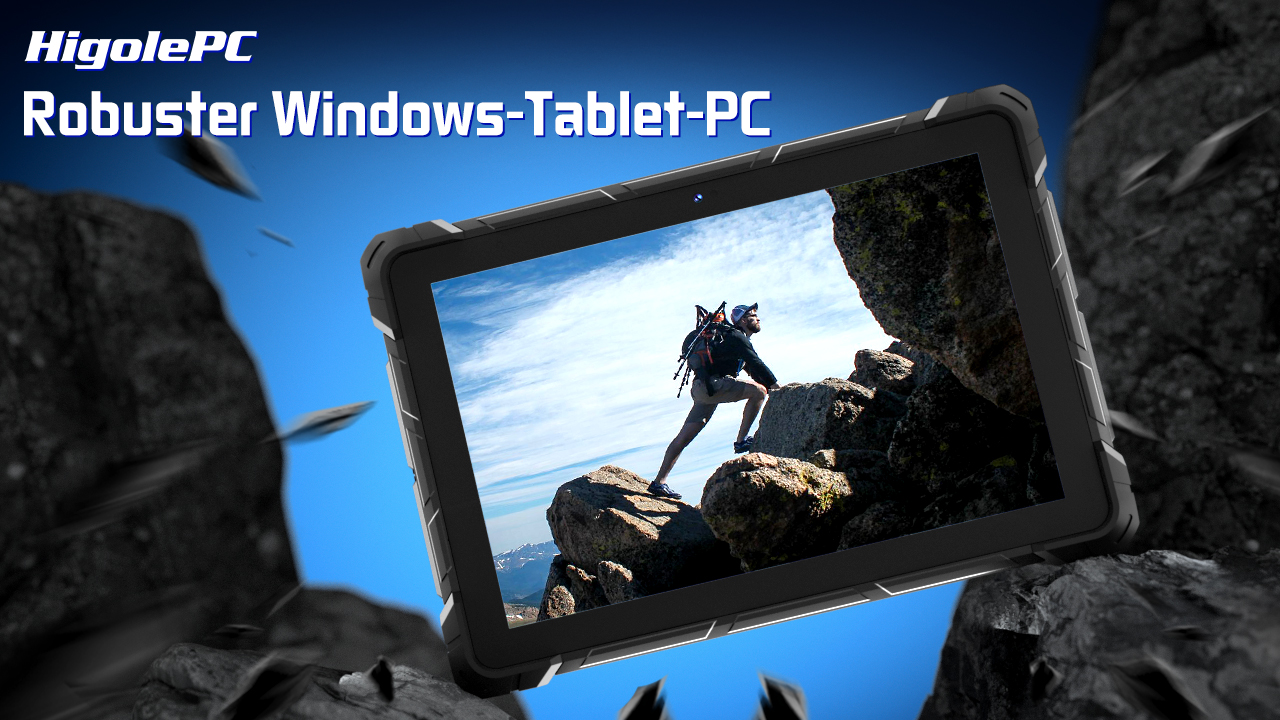
The Higole F7G is a10.1-inch rugged Windows tablet and mini PC hybrid designed for industrial, outdoor, and warehouse use. It features an IP67 waterproof/dustproof rating, an Intel Celeron N4120/J4105 processor, 8GB of RAM, and 128GB of storage.